
A ContentEd+ Premium members session
Find out more about ContentEd+ premium membership for your institution
When there's too many user experiences to improve and not enough UX professionals to do it, coaching others in UX is the answer.
In this session you’ll learn practical techniques to democratise UX skills across your institution. You’ll discover how to diagnose the kind of UX help colleagues need, guide them to appropriate UX approaches, and empower them to apply UX techniques themselves. Adopting this approach not only results in improved user experiences, it catches UX problems earlier, develops a sustainable UX resource, upskills colleagues and helps establish a unified response to developing all things digital.
Learning Outcomes: After attending this session, you will be able to:
Diagnose different types of UX requests and match appropriate coaching responses
Apply a coaching framework to guide colleagues through defining goals, evaluating scale, identifying resources, and creating actionable plans for their UX work
Teach beginner-friendly UX techniques (usability testing, semi-structured interviews, top tasks surveys) that provide maximum insight for minimum effort
Build trust-based coaching relationships that empower colleagues to take on UX themselves, viewing it as valuable professional development rather than an add-on task
Create a sustainable UX practice by shifting from doing all the work yourself to multiplying your impact through coached colleagues who embed user-centred thinking in their day-to-day work
About your speaker:
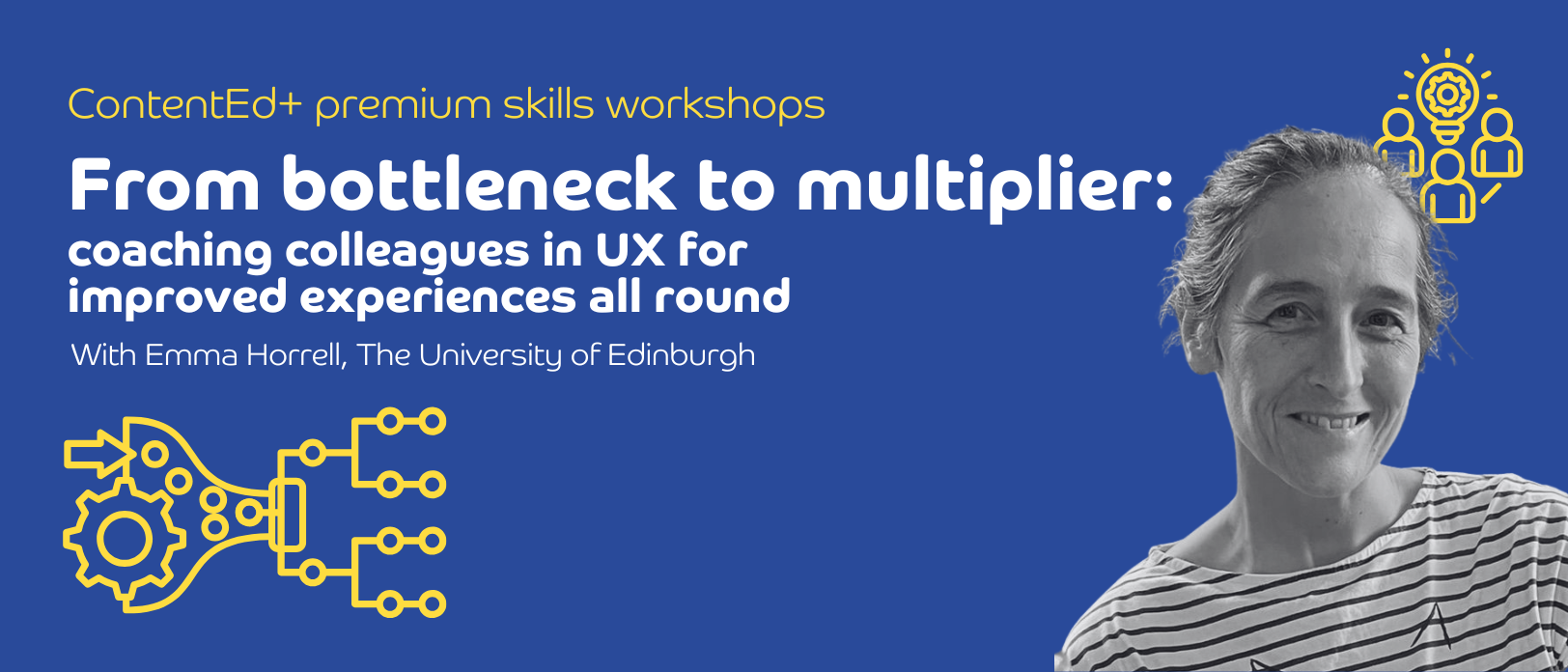
Emma Horrell, UX Manager, University of Edinburgh
Emma leads the UX Service at Edinburgh University, where she and her team transform how content creators across the university design and publish. She's passionate about empowering distributed teams through training, coaching, and smart process improvements.Obsessed with finding creative ways to help people craft better content, Emma is motivated by spotting friction points and turning them into opportunities for meaningful change, influencing individual perceptions and behaviours in the process.